

Can Seaside Silt be Solidified with a Soil Stabilization System?
Release time: 2025-11-06
جدول المحتويات
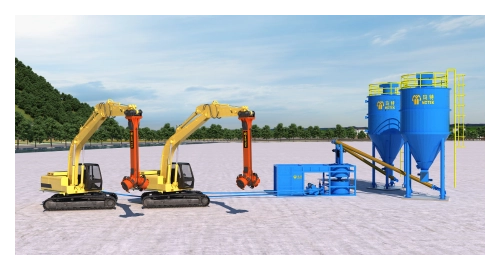
Seaside silt, a fine-grained soil found in coastal areas, often presents a significant challenge in construction projects due to its weak structural integrity. To overcome these challenges and make the soil more suitable for construction, soil stabilization techniques can be employed. In this article, we explore how soil stabilization systems can solidify seaside silt and make it more stable for coastal construction projects.

What is Seaside Silt?
Seaside silt refers to fine particles of soil that are often found in coastal regions. This soil type is composed mainly of silt-sized particles, which are smaller than sand but larger than clay. Seaside silt typically has low shear strength and can become saturated quickly, making it prone to erosion and instability, especially when subjected to construction or heavy traffic.
In construction, dealing with seaside silt is crucial because its unstable nature can lead to foundation issues, settlement, and soil erosion, making it necessary to apply stabilization methods to improve its load-bearing capacity.
The Challenge of Stabilizing Seaside Silt
Stabilizing seaside silt presents several challenges, primarily due to its high moisture content and fine particle size. Traditional soil stabilization techniques such as compaction and drainage often fail to provide the desired level of soil strength in these conditions. The challenge lies in improving the cohesion of the soil while maintaining its workability for construction.
Moreover, the aggressive marine environment in coastal areas can exacerbate soil instability, leading to issues such as erosion and coastal flooding. Therefore, an effective soil stabilization system must not only strengthen the soil but also offer long-term durability against coastal weathering and erosion.
What is Soil Stabilization?
Soil stabilization refers to the process of improving the engineering properties of soil, primarily to enhance its strength, durability, and load-bearing capacity. Several stabilization techniques can be used, depending on the soil type and the specific requirements of the project. Common soil stabilization methods include the use of cement, lime, polymers, and geotextiles.
For seaside silt, the primary goal of soil stabilization is to increase the soil’s resistance to erosion and prevent issues related to soil settlement. The process involves mixing stabilizing agents with the soil to modify its structure and enhance its performance in construction.
Can Soil Stabilization Systems Solidify Seaside Silt?
Yes, seaside silt can be solidified using various soil stabilization systems. Below, we explore the most commonly used techniques for stabilizing seaside silt.
Cement Stabilization
Cement stabilization is one of the most widely used methods for stabilizing fine-grained soils like seaside silt. In this process, cement is mixed with the silt to improve its cohesion and strength. The cement reacts with the soil particles, causing them to bond together, forming a more solid and durable structure.
This method is highly effective in areas that require improved load-bearing capacity, such as roads, buildings, and embankments in coastal zones. Cement stabilization also offers long-lasting results, making it a popular choice for coastal construction projects.
Lime Stabilization
Lime stabilization involves adding lime to seaside silt to reduce its plasticity and enhance its strength. Lime reacts with the fine particles in the silt, causing them to flocculate and bind together. This process leads to a stronger, more stable soil that is less prone to erosion.
Lime stabilization is particularly useful for silt with a high moisture content, which is common in coastal areas. It helps to reduce the soil’s tendency to swell and shrink, making it more suitable for construction in fluctuating environmental conditions.
Polymer and Chemical Stabilization
Polymer and chemical stabilization methods involve the use of synthetic polymers or other chemical agents to treat the soil. These substances can be applied to the soil surface or mixed with the soil to improve its mechanical properties.
Polymer stabilization is especially effective for stabilizing fine-grained soils like seaside silt, as it helps to increase the soil’s resistance to moisture and erosion. The chemicals used in this method often form a waterproof layer around the soil particles, preventing water from weakening the soil structure.
Geotextile Reinforcement
Geotextiles are synthetic fabrics that are often used in combination with other stabilization methods to reinforce soil. These materials can be placed within the soil layers or at the soil surface to provide additional strength and prevent soil erosion.
Geotextile reinforcement helps to stabilize seaside silt by improving its resistance to water infiltration and erosion, making it particularly useful in coastal areas where erosion is a concern. When combined with other stabilization techniques, geotextiles can significantly improve the performance of seaside silt.
Deep Soil Mixing (DSM)
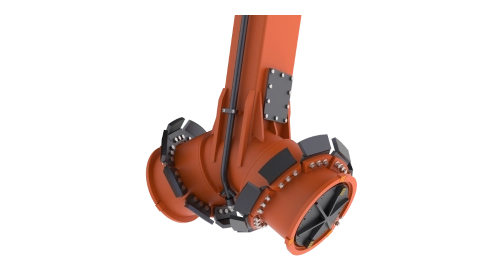
Deep Soil Mixing (DSM) is a technique that involves mixing soil with binding agents such as cement or lime at deeper levels within the soil. This process is typically used to stabilize large volumes of soil in areas where traditional stabilization methods may be less effective.
In coastal regions, DSM can be applied to stabilize seaside silt and prevent issues related to settlement and erosion. This technique is especially useful for large-scale infrastructure projects like highways, bridges, and piers.
خاتمة
Seaside silt can be solidified using a variety of طرق تثبيت التربة, including cement, lime, polymer, and geotextile reinforcement. These methods improve the soil’s strength, prevent erosion, and make it more suitable for coastal construction. Choosing the right stabilization technique depends on the specific characteristics of the soil, the project requirements, and the environmental conditions of the coastal area.
By applying effective soil stabilization systems, coastal construction projects can overcome the challenges posed by seaside silt and ensure the stability and longevity of their foundations.